




Schutt Log Homes
& Mill Works







Understanding Gray Wood: What It Means for Your Log Home
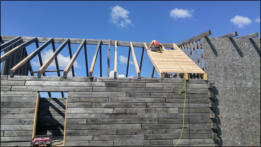
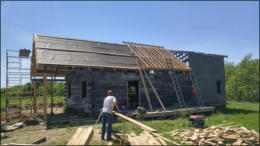
At Schutt Log Homes and Mill Works, we’re very familiar with gray wood and how to
handle it properly. When any type of wood is left exposed to the elements, it naturally
weathers to a silvery gray. This is a normal process that affects all wood species and is
purely surface-level. The gray appearance will remain until the outer layer is cut, sanded,
or planed away.
This weathering is caused by a combination of UV exposure, wind, moisture, dust,
pollen, and biological factors. Sunlight plays a major role—its ultraviolet rays
accelerate the graying process. In some environments, wood can begin to gray
within just a few weeks, while in others it may take years.
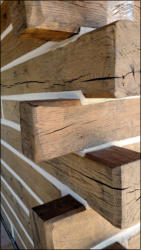
It’s important to understand that grayed wood is not old, rotten, or unusable. With oak
logs, the gray layer is only skin-deep. Once the logs are planed, their natural
beauty—grain, color, and texture—returns immediately.
Some customers love the rustic, aged appearance of naturally weathered wood.
Others prefer the fresh-cut look. Whichever you choose, proper sealing is
essential. Applying a quality wood preservative and sealer soon after planing
helps retain the desired look while protecting the wood’s strength and durability.
Products with UV blockers are especially effective at slowing future graying from
sun exposure.
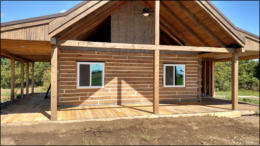
At Schutt Log Homes, our oak logs are rough-sawn. After the walls of your log
cabin are built, the entire exterior is planed with an electric planer to reveal the
wood’s natural grain and color. We strongly recommend treating the wood
immediately after planing to prevent moisture absorption and UV damage.